
-
Bharatiya Saksha Adhiniyam ( BSA ) – MCQ for practice
Which section of the Bharatiya Saksha Adhiniyam 2023 deals with the relevancy of facts? Answer: Section 5 When is hearsay evidence admissible according to BSA 2023? Answer: Only in specific cases Which section of Bharatiya Saksha Adhiniyam 2023 defines “admission”? Answer: Section 17 What is considered primary evidence under BSA 2023? Answer: Original documents Choose expert opinions are covered under…
Read More » -
IPC questions for study
1. The essential ingredients of crime are: Actus reus: A voluntary act or omission that is prohibited by law. Mens rea: The mental element of the crime, such as intent, knowledge, recklessness, or negligence. Both actus reus and mens rea must be present in order for a crime to be committed. For example, if you accidentally bump into someone on the street,…
Read More » -
Law of crime assignment 1 BW
1. Discuss whether the doctor is liable for the death of his patient in theaforesaid situation by identifying the appropriate provision in the IndianPenal Code, 1860 relating to the matter:‘A’, a doctor treating a patient understands that his patient will notsurvive. He communicates the news to his patient in good faith. Thepatient suffers a heart attack in shock on hearing…
Read More » -
Constitution Assignment 1 BW
1. Describe the purpose of the Preamble in the Indian Constitution and Discuss any three ideals mentioned in the Preamble. Ans – Purpose of Preamble – The preamble has been described as the “soul of the Constitution” and the “key to the interpretation of the Constitution.” It is not enforceable in court, but it is considered to be a guiding…
Read More » -
Contract 1 Study Material
A contract is a legally binding agreement between two or more parties. The two parties to a contract are the promisor and the promisee. Promisor: The promisor is the party who makes a promise. Promisee: The promisee is the party to whom the promise is made. Example: Alice (promisor) promises to deliver 100 widgets to Bob (promisee) by December 31st.…
Read More » -
Hindu law questions for study
1. Describe the status of marriage between Hindu male and Christian female without following the essential solemnized of Hindu marriage As per Hindu Marriage Act, 1955, a marriage between a Hindu male and a Christian female is not valid if it is not solemnized in accordance with the essential Hindu rites and ceremonies. The marriage will be considered void and…
Read More » -
Maneka Gandhi vs Union Of India on 25 January, 1978
Maneka Gandhi vs Union Of India on 25 January, 1978 Maneka_Gandhi_vs_Union_Of_India_on_25_January_1978Download
Read More » -
Laws
Law of Torts questions for study
What is the difference between damage and damages – Damage – Simply put, the term damage in legal parlance refers to the loss or any form of injury or disadvantage caused to a particular individual through natural means, and accident or intentional actions with motives can be termed as damage. Damages – might be associated with other terms that are…
Read More » -
Bombay High Court: Protection of SC/ST Act Not Limited to States Where Person is Recognized as SC/ST
The Scheduled Caste and Scheduled Tribe (Prevention of Atrocities) Act provides Scheduled Caste and Scheduled Tribe (SC/ST) members with complete protection, which the Bombay High Court has upheld in a landmark judgement. The decision, rendered by a Full Bench made up of Justices Revati Mohite Dere, Bharati Dangre, and NJ Jamadar, emphasizes that the protection offered by the Act cannot…
Read More » -
Uncategorized
Prohibits marriages by Hindu Marriage Act
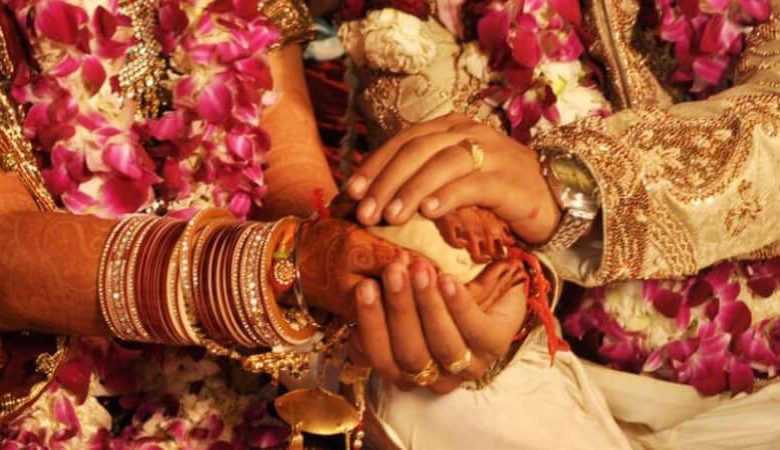
The Hindu Marriage Act (HMA) of 1955 forbids marriages between specific groups of people. Which are: Relationships that violate Hindu law’s ban on marriage are known as sapinda ties. Counting how many ascendants a man and a woman share allows us to calculate their sapinda connection. They are termed sapindas and cannot get married if they share one or more…
Read More »